

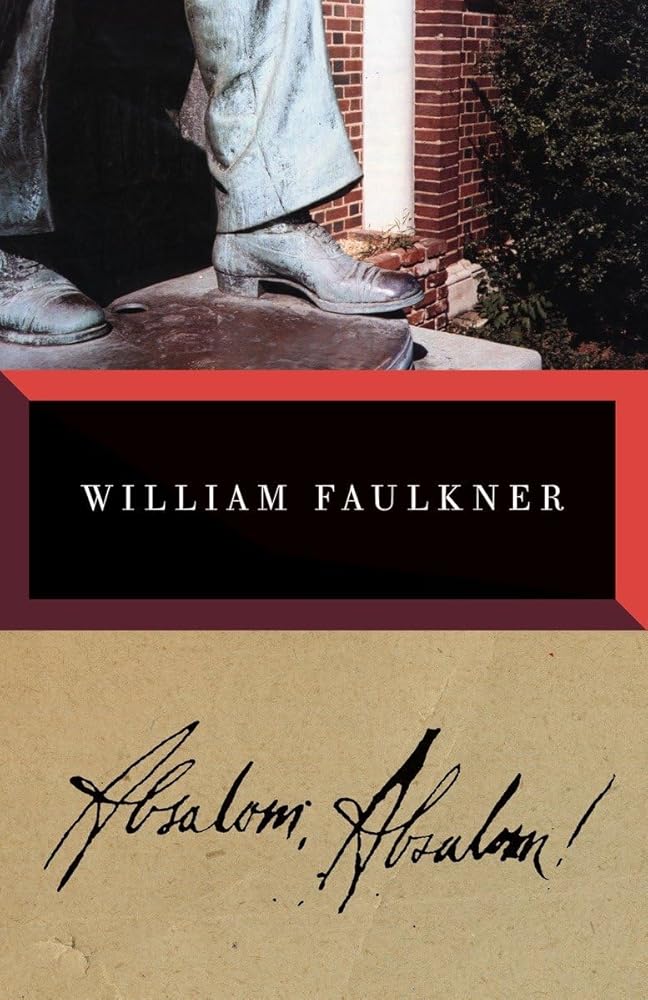
Absalom, Absalom!
By William Faulkner
Published in 1936, Absalom, Absalom! is widely regarded as one of William Faulkner’s most ambitious and significant novels, celebrated for both its formal complexity and its exploration of history, memory, and truth. Set in the American South, the novel centers on the rise and fall of Thomas Sutpen, a poor man who builds a fortune through sheer determination and attempts to secure his legacy by marrying into a respectable family.
Sutpen’s relentless ambition and obsessive need for control ultimately lead not only to his own undoing but also to the disintegration of his family. Rather than presenting his story in a straightforward narrative, Faulkner reconstructs it through multiple voices, each offering conflicting versions of events as they attempt to make sense of Sutpen’s life and its consequences.
This fragmented structure becomes central to the novel’s meaning, emphasizing the instability of historical truth and the ways in which memory is shaped by perspective, bias, and time. As the narrators piece together and dispute Sutpen’s story, the reader is drawn into a meditation on what can truly be known about the past, and how much is inevitably lost or distorted in the telling.
Rich, challenging, and deeply layered, Absalom, Absalom! stands as a landmark of American literature, interrogating the limits of narrative itself and the haunting persistence of history.
Year: 1990
Format: Paperback
Publisher: Vintage
Categories: Classic American Literature, Classic Literature & Fiction, and Literary Fiction
Pages: 313
Barcode:
9780679732181
Availability:
In stock
Product type:
Classics
- $ 300.00
- $ 300.00
- Unit price
- per
Also recommended
Example product title
- $ 300.00
- $ 300.00
- Unit price
- per
Example product title
- $ 300.00
- $ 300.00
- Unit price
- per
Example product title
- $ 300.00
- $ 300.00
- Unit price
- per
Example product title
- $ 300.00
- $ 300.00
- Unit price
- per
Example product title
- $ 300.00
- $ 300.00
- Unit price
- per
Example product title
- $ 300.00
- $ 300.00
- Unit price
- per
Example product title
- $ 300.00
- $ 300.00
- Unit price
- per
Example product title
- $ 300.00
- $ 300.00
- Unit price
- per
Example product title
- $ 300.00
- $ 300.00
- Unit price
- per
Example product title
- $ 300.00
- $ 300.00
- Unit price
- per
Recently Viewed
Example product title
- $ 300.00
- $ 300.00
- Unit price
- per
Example product title
- $ 300.00
- $ 300.00
- Unit price
- per
Example product title
- $ 300.00
- $ 300.00
- Unit price
- per
Example product title
- $ 300.00
- $ 300.00
- Unit price
- per
Example product title
- $ 300.00
- $ 300.00
- Unit price
- per
Example product title
- $ 300.00
- $ 300.00
- Unit price
- per
Example product title
- $ 300.00
- $ 300.00
- Unit price
- per
Example product title
- $ 300.00
- $ 300.00
- Unit price
- per
Example product title
- $ 300.00
- $ 300.00
- Unit price
- per
Example product title
- $ 300.00
- $ 300.00
- Unit price
- per
- Choosing a selection results in a full page refresh.