

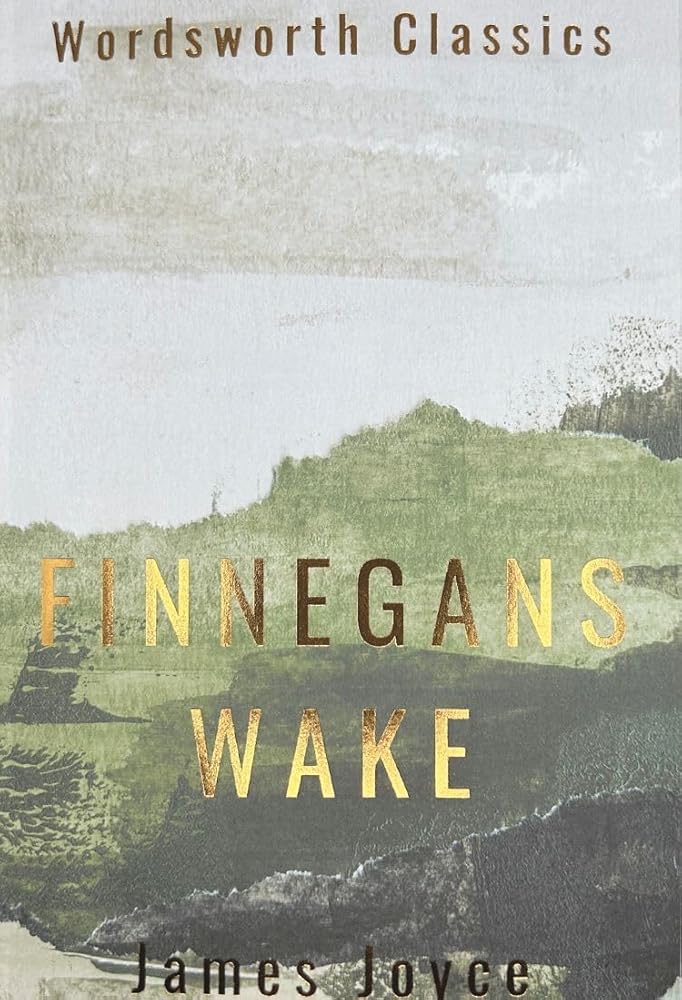
Finnegans Wake
By James Joyce
Wordsworth Classics
Finnegans Wake is the final major work of James Joyce, centered loosely on figures like Here Comes Everybody and Anna Livia Plurabelle and their family, but in a way that suggests it is also, in some sense, about everyone and everything.
Unlike Joyce’s earlier Ulysses, which experiments with many distinct styles, Finnegans Wake is built as a single, dense, flowing soundscape. Its language draws from English grammar and vocabulary but is deliberately transformed into a vast system of puns, wordplay, and layered meanings that resist any fixed interpretation.
Joyce describes this as a “revolution of the word,” creating a text that destabilizes meaning rather than clarifying it, opening language into ambiguity, multiplicity, and constant reinterpretation. The result is both a cultural experiment in communication and miscommunication, and a radical reimagining of how language constructs reality.
At the same time, it is famously playful and irreverent: a work filled with humour, obscene innuendo, and linguistic excess, often described as one of the most challenging yet exuberant books ever written.
Year: 2012
Format: Paperback
Publisher: Wordsworth Editions Ltd
Categories: Classic Literature & Fiction
Pages: 656
Barcode:
9781840226614
Availability:
In stock
Product type:
Classics
- $ 300.00
- $ 300.00
- Unit price
- per
Also recommended
Example product title
- $ 300.00
- $ 300.00
- Unit price
- per
Example product title
- $ 300.00
- $ 300.00
- Unit price
- per
Example product title
- $ 300.00
- $ 300.00
- Unit price
- per
Example product title
- $ 300.00
- $ 300.00
- Unit price
- per
Example product title
- $ 300.00
- $ 300.00
- Unit price
- per
Example product title
- $ 300.00
- $ 300.00
- Unit price
- per
Example product title
- $ 300.00
- $ 300.00
- Unit price
- per
Example product title
- $ 300.00
- $ 300.00
- Unit price
- per
Example product title
- $ 300.00
- $ 300.00
- Unit price
- per
Example product title
- $ 300.00
- $ 300.00
- Unit price
- per
Recently Viewed
Example product title
- $ 300.00
- $ 300.00
- Unit price
- per
Example product title
- $ 300.00
- $ 300.00
- Unit price
- per
Example product title
- $ 300.00
- $ 300.00
- Unit price
- per
Example product title
- $ 300.00
- $ 300.00
- Unit price
- per
Example product title
- $ 300.00
- $ 300.00
- Unit price
- per
Example product title
- $ 300.00
- $ 300.00
- Unit price
- per
Example product title
- $ 300.00
- $ 300.00
- Unit price
- per
Example product title
- $ 300.00
- $ 300.00
- Unit price
- per
Example product title
- $ 300.00
- $ 300.00
- Unit price
- per
Example product title
- $ 300.00
- $ 300.00
- Unit price
- per
- Choosing a selection results in a full page refresh.